Introduction to Invoice Financing: Invoice Financing As A Business Loan Option
Invoice financing as a business loan option – Invoice financing is a financial solution that allows businesses to access cash quickly by using their outstanding invoices as collateral. It serves as a bridge for companies facing cash flow challenges, enabling them to maintain operations and invest in opportunities without waiting for their customers to pay. This financing method is crucial for businesses, particularly small and medium enterprises, as it provides immediate liquidity without the long approval processes typical of traditional loans.The main features that distinguish invoice financing from conventional loans include its reliance on accounts receivable rather than credit history, faster processing times, and the ability to obtain funding based on the invoices themselves rather than the overall creditworthiness of the business.
This makes it an attractive option for many businesses looking for a swift and efficient way to manage cash flow.
Types of Invoice Financing
There are several types of invoice financing options available for businesses, primarily categorized into factoring and discounting. Understanding these options helps businesses choose the best fit for their needs.
- Factoring: In this arrangement, a business sells its invoices to a third-party company (factor) at a discount. The factor then takes over the responsibility of collecting payments from the customers.
- Invoice Discounting: This allows businesses to borrow money against their outstanding invoices while retaining the responsibility for collecting payments. The lender provides a percentage of the invoice value upfront and collects the full amount later.
| Feature | Factoring | Invoice Discounting |
|---|---|---|
| Control over customer relationships | Factor handles collections | Business retains control |
| Confidentiality | Usually not confidential | Generally confidential |
| Funding speed | Fast | Moderate |
Both options have their pros and cons. Factoring can provide immediate cash flow relief but may strain customer relationships due to the factor’s involvement. Invoice discounting allows businesses to maintain control over their collections but may involve more rigorous eligibility criteria.
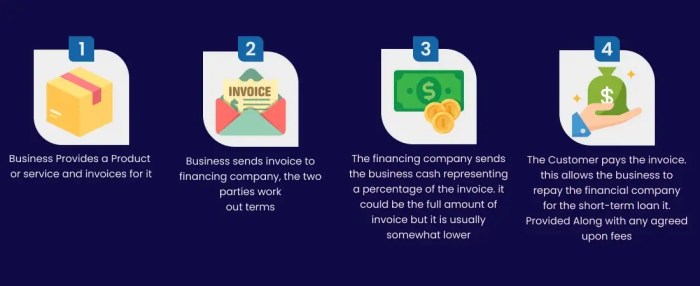
How Invoice Financing Works
The process of obtaining invoice financing is straightforward and typically involves the following steps:
1. Application Submission
Businesses submit an application along with their outstanding invoices to a lender.
2. Approval Process
The lender evaluates the invoices and the creditworthiness of the clients who owe the invoices.
3. Funding
Once approved, the lender provides a percentage of the invoice value, usually between 70% to 90%.
4. Payment Collection
The lender either collects payments directly (in factoring) or the business does so (in discounting). Once payments are received, the lender releases the remaining balance minus any fees.For example, a manufacturing company with $100,000 in outstanding invoices can leverage invoice financing to receive an immediate cash infusion of $80,000, allowing it to continue operations while waiting for customer payments.
Eligibility Criteria
Common eligibility criteria for businesses seeking invoice financing include:
- Minimum time in business (usually 6 months to 1 year)
- Consistent invoicing practices
- Creditworthiness of the clients who owe the invoices
A checklist of requirements may consist of:
- Business registration and financial documents
- Details of outstanding invoices
- Customer credit profiles
Factors that can affect approval rates include the creditworthiness of the customers, the length of time the invoices have been outstanding, and the overall health of the business.
Costs and Fees Associated with Invoice Financing
Invoice financing comes with various costs, which businesses need to understand before proceeding. Typically, businesses will encounter:
- Factoring Fees: These are fees charged by the factor based on the invoice value, usually ranging from 1% to 5% per month.
- Discounting Fees: Interest rates on borrowed amounts, which may vary based on the risk profile.
- Additional Fees: Possible administrative and service fees that can add to the total cost.
When comparing the cost structures of invoice financing with traditional loan options, businesses often find that while invoice financing may seem more expensive, it offers quicker access to necessary funds, which can outweigh the higher costs.
Advantages of Invoice Financing
The benefits of invoice financing are numerous, making it a compelling choice for many businesses:
- Quick access to cash flow
- Improved financial flexibility
- Less stringent qualification criteria than traditional loans
Successful case studies demonstrate the effectiveness of invoice financing. For instance, a small construction firm used invoice financing to manage payroll during a project wait, allowing them to complete work on time and maintain a strong reputation. Scenarios where invoice financing is particularly advantageous include seasonal businesses or those with extended payment terms from clients.
Disadvantages of Invoice Financing, Invoice financing as a business loan option
While there are clear benefits, there are also potential drawbacks to consider:
- Cost may be higher than traditional financing
- Dependence on customer creditworthiness
- Possible impact on customer relationships
For example, a startup may find that invoice financing is not ideal if their clients have poor credit ratings, as this can limit access to funding. When comparing risks, businesses should weigh the costs and potential strain on relationships against the benefits of immediate cash flow.
Real-World Applications
Invoice financing is utilized across various business sectors, including:
- Manufacturing
- Wholesale and distribution
- Freelancers and service providers
Small businesses, in particular, can benefit significantly from this financing option, as it allows them to access immediate funds for operations, marketing, or growth initiatives without the burden of traditional financing processes. Companies like a local graphic design firm have successfully leveraged invoice financing to manage cash flow and take on larger projects, illustrating its utility in real-world scenarios.
Frequently Asked Questions (FAQs)
Despite its advantages, there are many misconceptions surrounding invoice financing. Common misunderstandings include:
- Invoice financing is only for struggling businesses.
- It requires giving up customer relationships.
- It is too expensive for small businesses.
Clarifying these misconceptions involves explaining that invoice financing can benefit stable businesses seeking growth, that businesses can maintain relationships with customers through invoice discounting, and that it can be a cost-effective solution depending on the situation.
Future of Invoice Financing
The future of invoice financing is poised for growth, influenced by several trends such as the increasing digitization of financial services and the rise of fintech companies. Innovations in technology, such as AI and blockchain, may streamline the invoice financing process, providing faster approvals and enhanced security.Emerging technologies are expected to impact practices by enabling real-time data analysis and automatic risk assessments, which could revolutionize how businesses access and utilize invoice financing going forward.